
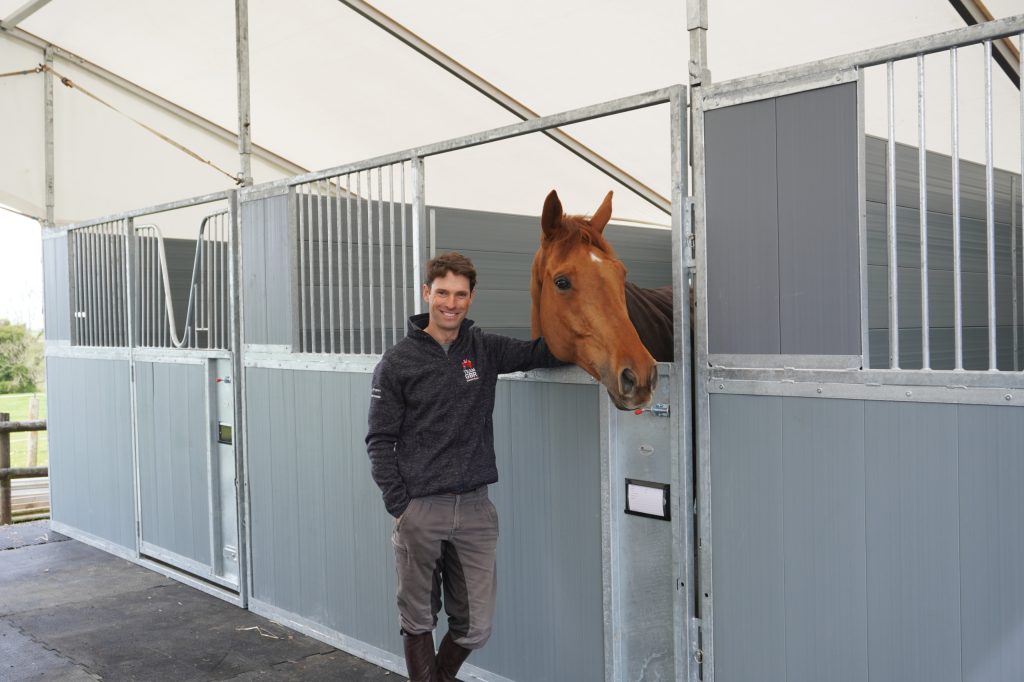
Beyond Events: The Case for Long-Term Temporary Stabling
The Expanding Role of Temporary Stabling
For many, temporary stabling brings to mind the rows of structures seen at leading equestrian events: welfare-led, professionally installed, and trusted to house horses competing at the highest level. Yet long-term temporary stable hire is increasingly proving just as vital, offering professional, welfare-led environments well beyond the event field..
The role of temporary stabling extends into everyday equestrian life. Breeders, race and competition yards, polo teams, riding schools, and private owners are turning to long-term temporary stable hire as a strategic way to provide environments that are robust, adaptable, and built to perform over the long term.
What Long-Term Temporary Stable Hire Brings
Not every challenge calls for permanent bricks and mortar. Yards face seasonal peaks, operational pressures, and moments of change where existing infrastructure simply isn’t enough. Foaling, sales preparation, winter intake, or refurbishment projects can all demand additional capacity, quickly and without compromise.
The same Woodhouse stables that house horses at five-star events and major race meetings are also available for long-term hire. They deliver welfare, safety, and performance day after day.
Supporting Change With Long-Term Temporary Stables
Renovations, relocations, or yard extensions inevitably create pressure points. Horses still need consistent, welfare-led environments, even when permanent facilities are disrupted. Long-term hire ensures continuity. It prevents compromise not only to training routines, but also to horses’ comfort, health, and recovery.
Temporary stabling also plays a role in weaning and youngstock management, where calm separation and safe group housing are essential. Well-ventilated boxes and secure layouts reduce stress on both mares and foals, while giving handlers confidence that hygiene and welfare standards can be maintained. For a closer look at how these principles apply to young horses, see Temporary Stables, Permanent Welfare.
Long-term temporary stable hire allows yards to scale up when needed, with layouts tailored to workflow, horse numbers, and the realities of day-to-day management, without the cost, delay, or permanence of new construction.
Managing Seasonal Pressures With Welfare-Led Temporary Stabling
Breeding seasons, sales preparation and winter intake all create peaks in demand. Foaling requires hygienic, ventilated boxes with safe space for mares and foals. Sales prep, meanwhile, relies on hygienic stables that support calm and consistent preparation of young horses. In both cases, design is not an afterthought: welfare-led features directly shape outcomes.
For a closer look at how these principles apply to youngstock, see our article Temporary Stabling for Foals and Yearlings: Planning Ahead with Flexibility in Mind.
Long-term temporary stable hire allows yards to scale up when needed, with layouts tailored to workflow, horse numbers, and the realities of day-to-day management, without the cost, delay, or permanence of new construction.
Reducing Risk and Strengthening Biosecurity in Temporary Stables
Horse movement across yards and borders brings risk. Quarantine and isolation blocks are essential to reduce disease transmission, whether for international runners in racing or new arrivals onto a stud.
Woodhouse designs its stables for these scenarios, using non-porous walling, robust drainage, and layouts that make thorough disinfection achievable. For veterinary-led guidance on infection control and biosecurity, see BEVA’s Infection Control resources.
Flexibility in Long-Term Temporary Stable Hire
Long-term hire also enables professional facilities where and when they are needed, from seasonal polo teams to riding schools expanding capacity, or private yards hosting clinics and training camps.
The benefit goes beyond flexibility. We reuse and redeploy structures across projects, reducing material impact and minimising site disruption. Within Woodhouse, teams actively contribute reuse and recycling initiatives, embedding sustainability into everyday delivery. More on this can be found in Sustainability in Practice.
Welfare as the Consistent Thread in Temporary Stabling
Long-term hire is not just about capacity; it is about continuity. Horses quickly show when environments fall short, whether through disrupted rest, weaving, or anxious behaviour. Woodhouse designs, from ventilation and light to solid build quality, reduce these stressors, helping horses settle and recover more effectively.

“What impressed me most was the build quality and how well the stables perform day-to-day.
They’re clearly designed with horses in mind: solid in bad weather, easy to clean, and no compromises on welfare.”
George Peckham, Racehorse Trainer
Closing Reflection
Temporary stabling has long been essential to event delivery. But its role across private yards, breeding farms, race yards, polo, and wider equestrian disciplines is growing: not as a stop gap, but as a strategic choice.
This approach is not about replacing permanent infrastructure. It complements it with welfare-led capacity when it matters most. Long-term hire ensures facilities remain welfare-led, even during disruption or peak demand. Horses stay in environments designed for their comfort, safety, and recovery.
For Woodhouse, long-term hire is part of a wider commitment: making welfare-led design available wherever horses are housed, whether for a week, a season, or a year. It means combining stability with flexibility, and quality without compromise, for horses and for the people who care for them.
For more on how welfare is built into every aspect of our approach, see our article: Temporary Stables, Permanent Welfare.