
Equine Influenza and Event Biosecurity: The Role of Temporary Stabling
With equine influenza cases rising, Woodhouse explains how well-prepared temporary stabling can support biosecurity, horse welfare and reassurance at events.
Equine influenza is currently one of the most significant welfare and operational concerns facing the UK horse sector. Equine influenza cases continue to rise across the UK. As a result, racing authorities and equestrian organisations have rightly placed renewed focus on vaccination, movement management, daily health monitoring and infection control.
According to the Equine Infectious Disease Surveillance update published on 14 May 2026, EIDS identified 60 laboratory-confirmed equine influenza outbreaks across 34 UK counties since the beginning of April. It described this as “sustained national circulation of equine influenza virus.” EIDS also reported that 35 of the 60 outbreaks, or 58%, involved horses with a recent history of travel. This highlights the role horse movement can play in spreading infection between premises and regions.
The British Horseracing Authority has also introduced additional precautionary measures. These include restricting raceday access to horses from licensed training yards only.The BHA said the decision would result in the “abandonment of all scheduled Hunter Chase races from 20 May.” It also confirmed the cancellation of other equine activities at racecourses, including Retraining of Racehorses parades, petting farms and pony rides.
Why this matters for horses attending events
For owners, riders, grooms and event organisers, this is understandably concerning. Equine influenza, often referred to as equine flu or horse flu, spreads readily between horses. It is particularly relevant where horses travel, come into close contact and spend time in shared event environments.
The industry should not respond with panic, but it does need to address the current situation directly and responsibly.
No temporary stable, event protocol or supplier can remove risk entirely. Veterinary guidance must always lead the medical response. The wider event environment can, however, support the behaviours and standards that help reduce avoidable risk. Cleanliness, disinfection, airflow, stable layout, horse movement and communication all influence how practical it is for organisers, grooms, owners and veterinary teams to maintain good biosecurity throughout an event.
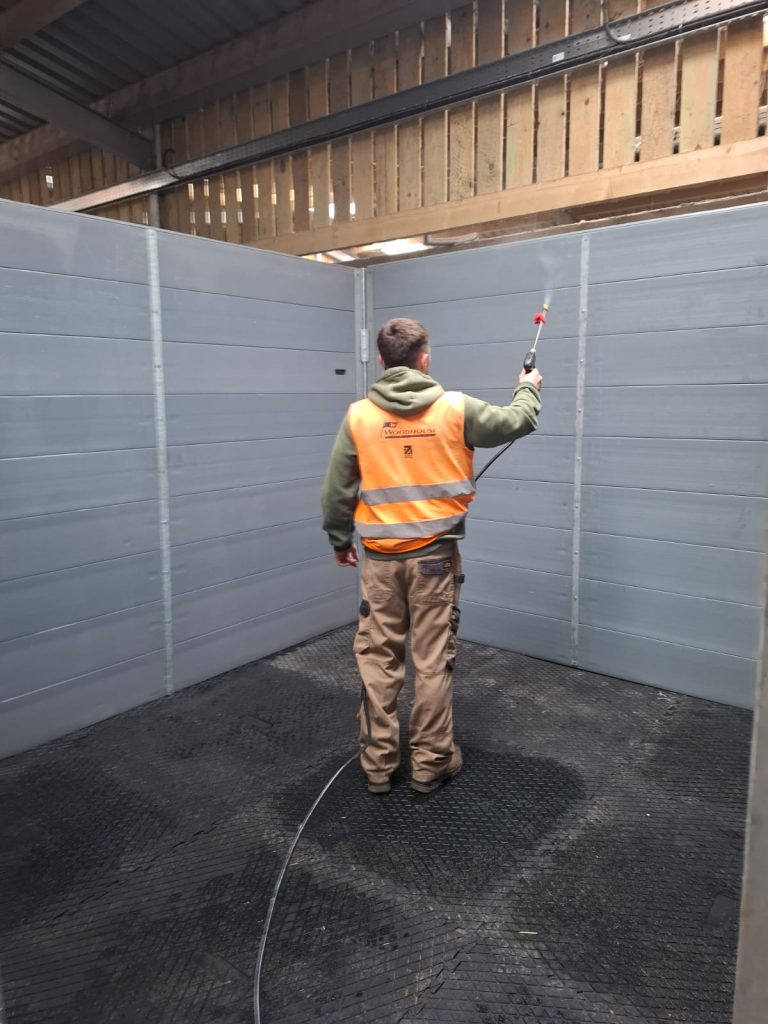
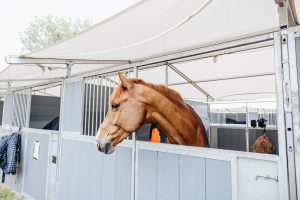
Temporary stabling has a meaningful role within that wider environment. If you are attending an event this season where Woodhouse temporary stables are in place, our preparation begins long before you and your horse arrive. We support the cleaning, disinfection and inspection process through stable design, material choice, airflow and layout. This helps create an environment that supports horse health, responsible management and confidence from the outset.
What equine influenza tells us about event environments
Equine influenza is not new, but the current outbreak has highlighted how quickly disease risk can change when horses move between yards, venues and events. The issue is not only the number of confirmed cases; it is how easily risk can increase in busy equestrian environments. Horses arrive, unload, use shared routes and settle into temporary stable areas, while their teams manage equipment, bedding, vehicles, water sources and high-touch surfaces.
In that setting, stable areas cannot be viewed simply as structures that house horses for a short period of time. They form part of the welfare environment. They are where horses arrive after travelling, where grooms establish routines, where health monitoring often takes place and where horses rest between activity. Their design and preparation influence how easily good practice can be maintained.
This is the broader point the current situation reinforces. Biosecurity is not only a veterinary issue, and welfare is not only a matter of comfort. In busy event settings, welfare, infection prevention and operational planning overlap, and the temporary stable environment plays a practical role in all three.
How equine influenza changes preparation before horses arrive
Effective biosecurity depends on several layers working together. Vaccination, health monitoring, responsible travel decisions, isolation protocols and veterinary oversight all remain essential, but the physical environment can make good biosecurity easier to apply consistently.
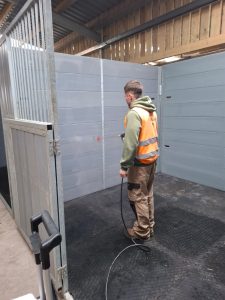
For that reason, Woodhouse has embedded disinfection into its stable preparation process through its partnership with Equine BIO Genie. We disinfect our temporary stables using Equine BIO Genie products as part of the preparation process before horses arrive on site, rather than only when there is a known concern. This is an important distinction, because prevention should not depend on whether a specific disease risk has already been identified. Disinfection needs to sit within the standard preparation process, alongside cleaning, inspection, layout planning and handover.
Equine BIO Genie specialises in equine biosecurity and infection control products for stable and yard environments. For this article, the key point is not the product itself, but the standard it supports: we include disinfection within our preparation process so temporary stabling arrives ready to support responsible horse management from the outset.
This partnership forms one part of a wider approach. The materials we choose, the way we clean each stable, the airflow we design for and the layouts we plan all contribute to the same objective: creating temporary stabling that supports welfare, hygiene and confidence before horses arrive.
Design that supports hygiene and horse management
The design of a temporary stable directly affects how effectively teams can clean, disinfect and prepare it between uses. Porous materials, exposed timber, difficult corners and unnecessary internal fixings can all make thorough cleaning more difficult, particularly in temporary environments used repeatedly throughout the season.
Woodhouse temporary stables use smooth, non-porous HDPE walling and robust components because durability and hygiene have to work together. Materials that can be properly wiped down and disinfected help make good preparation more achievable in real event conditions. That is a practical welfare consideration, not simply a product feature.
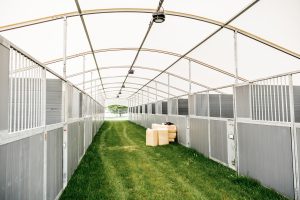
Stable layout also contributes to effective prevention. Solid partitions help reduce unnecessary direct contact between horses, while planned stable blocks support clearer movement routes and calmer day-to-day management. Where required, the flexibility of temporary stabling can help organisers create separation, zoning or isolation areas as part of a wider event plan.
Airflow is also part of this wider design picture. In a busy event setting, ventilation supports respiratory comfort and helps avoid stagnant, stuffy stable conditions, particularly when horses are travelling, competing and spending time close to others. The British Horse Society notes that effective ventilation is important year-round to circulate fresh air, support temperature control and help reduce respiratory risk.
These design choices cannot replace veterinary advice or event protocols, but they do help make those protocols easier to apply consistently in a busy event environment.
Six practical considerations during equine influenza concerns
Equine influenza has reinforced the importance of practical, consistent biosecurity across the whole event environment. The details will vary depending on the event, veterinary advice, governing body requirements and current equine influenza guidance, but five considerations are relevant wherever horses are travelling and stabled away from home.
Check health / vaccination requirements before travel
Follow current veterinary and governing body guidance, check vaccination requirements and avoid travelling horses that show signs of illness.
Keep equipment separate
Shared equipment can increase disease transmission risk. Buckets, grooming kits, tack and other high-touch items should be kept separate wherever possible.
Monitor your horse closely during the event
Watch for changes in temperature, appetite, energy levels, coughing, nasal discharge or any signs that your horse is not quite right. Early awareness helps concerns be raised quickly.
Look for visible preparation standards
A clean, well-prepared stable area should give reassurance that hygiene, disinfection and horse management have been thoroughly addressed.
Reduce unnecessary close contact with other horses
Where possible, avoid nose-to-nose contact with horses from other yards and be mindful around shared routes, holding areas and stable lines.
Know who to contact if there is a concern
Before or during the event, make sure you know who to speak to if your horse shows signs of illness, so concerns can be raised quickly and calmly.
Reassurance through visible preparation
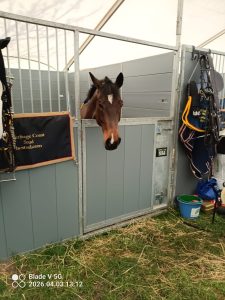
One of the strongest comments we hear from competitors, owners and grooms is that they feel reassured when they arrive and see a Woodhouse temporary stable. That reassurance comes from more than appearance. It reflects confidence in a stable designed, prepared and delivered with horse welfare in mind.
In a period where equine influenza is rightly causing concern, visible preparation carries even greater weight. Owners and grooms want to know that the stable their horse is walking into has gone through a clear cleaning and disinfection process, with its role in the wider event environment properly considered. Event organisers want confidence that the temporary stabling they provide supports welfare and responsible management. The wider public increasingly expects horse sport to demonstrate care clearly and consistently, not only during performance but throughout the supporting environments around it.
This is where temporary stabling has an important role to play. A well-prepared stable area cannot eliminate disease risk, but it can show that organisers and suppliers have considered welfare, hygiene and horse management before horses arrive. That visibility helps build trust at a time when the industry needs to respond carefully and responsibly.

“When horses arrive at an event, owners and grooms need to know that the stable environment has been prepared with the same care they would expect in any responsible yard.
For us, that means looking at the full picture before horses arrive: how the stable can be cleaned, how it can be disinfected, how air moves through it, how horses are separated, and how the layout supports the people caring for them.
Disinfection is embedded because prevention depends on consistency. It should not take an outbreak for the industry to think carefully about the environment horses are walking into.”
Dan Hassall, Owner & Managing Director, Woodhouse
What equine influenza means for temporary stabling
Equine influenza has brought biosecurity into sharp focus, but the principles behind good preparation are not new. The current situation shows why welfare standards need to be visible, consistent and built into the event environment before horses arrive.
Temporary stabling is part of that environment. It must support horse health, practical management and trust in the standards being provided.
Temporary should never mean temporary thinking. When horses arrive at an event, they deserve a stable environment that reflects the care, consistency and responsibility behind it.
Further reading and resources
- Equine Infectious Disease Surveillance: Equine influenza outbreak update, 14 May 2026
- British Horseracing Authority: Equine flu update and precautionary measures
- British Horse Society: Horse care in hot weather / ventilation guidance
- The Standards We Set: Why Welfare-Led Temporary Stabling Isn’t Optional